
What AI shopping optimization is
AI shopping optimization is the work of getting your products found, compared and recommended inside AI assistants, such as ChatGPT, Google AI Mode, Gemini and Perplexity, when a person asks them what to buy. It joins three disciplines: classic SEO for the product pages, AEO (answer engine optimization) so the assistant can quote clear answers about each product, and GEO (generative engine optimization) so your brand appears in the comparisons these tools write.
It is not a trick or a paid placement. OpenAI describes the results of its shopping research in ChatGPT as organic and based on publicly available retail sites, and Perplexity says its product cards are not sponsored. What decides who appears is the quality of your product data and how much the web trusts your store.
Why AI shopping matters now
Product research is moving into chat. In November 2025, OpenAI launched shopping research for logged-in ChatGPT users on the Free, Go, Plus and Pro plans: the assistant asks follow-up questions, reads product pages, compares prices, reviews and specs, and writes a buyer's guide in a few minutes. Google's AI Mode draws on its Shopping Graph, which Google says holds more than 50 billion product listings, with more than 2 billion updated every hour.
For a store, this changes the first contact. The shopper may never see ten blue links or a category page. They see a short list of three or four products the assistant picked. If your catalog is missing from the data it reads, or your product pages are vague, you are not on that list, even if you rank well in classic Google results.
How AI shopping assistants choose products
Each platform works a little differently, but they read the same kinds of signals:
| Platform | Where the product data comes from | What you can do |
|---|---|---|
| ChatGPT | Product pages it reads on the web, plus feeds shared through the Agentic Commerce Protocol | Let OpenAI's search crawler read your site and keep a clean product feed |
| Google AI Mode and Gemini | The Shopping Graph, fed by Merchant Center and by the product data on your pages | Keep Merchant Center accurate, use Product structured data and free listings |
| Perplexity | Its web index and the free Merchant Program | Make product pages crawlable and complete, and apply to the program if you qualify |
OpenAI's product feed specification lists nine basic fields for a useful discovery feed: item ID, title, description, URL, brand, seller name, image, availability and price. Reviews, star ratings, GTIN, shipping and return policy are optional, but they are exactly what an assistant needs to compare you with another store. On top of the data, assistants weigh what others say: reviews, comparison articles and forums.
Buying inside the chat is still changing. OpenAI scaled back its Instant Checkout in March 2026, and purchases from ChatGPT now finish on the merchant's own checkout. Google offers agentic checkout with Google Pay for eligible US merchants, and its Universal Commerce Protocol requires a Merchant Center account. Forrester's advice to retailers is to invest in discoverability while keeping control of checkout, customer data and margin. That is the approach I follow.
Reddit, reviews and mentions: the off-site half
AI answers lean on third-party opinions. In a Semrush study of 217,000 prompts published in November 2025, Reddit was the most cited domain on Perplexity, the second on ChatGPT Search and the third on Google AI Mode. 80% of the Reddit posts they cited had fewer than 20 upvotes: a useful answer in the right thread matters more than popularity.
The honest way to be part of those conversations is slow: answer real questions in the communities where your buyers ask them, say who you are, follow each community's rules and ask real customers for reviews. Fake reviews and paid posts that hide who wrote them are not an option. In the US, the FTC rule on fake reviews bans them, and platforms remove them.
What's included
AI shopping audit
I ask ChatGPT, Google AI Mode, Gemini and Perplexity the questions your buyers ask and record which products and stores they recommend.
Product feeds
Merchant Center and product feed cleanup: titles, descriptions, GTIN, variants, prices, stock, shipping and returns.
Product structured data
Product, Offer, review and variant markup that matches the feed and the visible page.
AI crawler access
Robots.txt, firewall and rendering checks so OpenAI, Perplexity and Google crawlers can read your product pages.
Answer-ready product pages
Specs, comparisons, sizing and FAQs written the way buyers ask, so assistants can quote them (AEO).
Reviews and community mentions
A review routine with real customers and a plan to take part in Reddit and forums the honest way (GEO).
Who it is for
- Online stores on Shopify, WooCommerce, BigCommerce or custom platforms.
- Brands whose competitors already appear when people ask ChatGPT what to buy.
- Stores with good Google rankings but no presence in AI answers.
- Retailers with large catalogs where product data is incomplete or inconsistent.
How it works
- 01
Free diagnosis
A 30-minute call where we ask the assistants about your products together and look at what comes back.
- 02
AI shopping audit
Prompts by category, feed and Merchant Center review, crawler access and the sources each assistant cites.
- 03
Prioritized plan
What to fix in the feed, the pages and the off-site signals, in order of impact.
- 04
Implementation
I fix the feed, structured data and pages, or prepare the work for your team.
- 05
Monthly tracking
The same prompts every month, to see which products appear and which sources are cited.
An AI shopping audit usually takes about one week from access to Merchant Center, Search Console and your store.
Pricing
Prices from the same list as the rest of my services.
AI visibility audit (GEO and AEO)
from $400How ChatGPT, Perplexity and Google's AI see your brand and products, with a prioritized plan.
Product schema
from $300JSON-LD Product, Offer and variants, aligned with your feed.
Monthly e-commerce SEO
from $1,750 / monthGrowth or Scale plan, depending on catalog size.
GEO and AEO, including AI shopping, are part of the Growth and Scale plans. See all plans and prices.
Not sure where to start?
Get a free SEO audit. In 30 minutes I show you what is holding your site back and the three changes I would make first.
Real experience behind this service
I supervise the SEO of 18 US online stores with more than 3 million products in total, where product titles, variants, structured data and feeds decide what search engines show. AI shopping assistants read the same product data, so the catalog work is the base of this service.
I also track AI answers for my own brand: in November 2026 I ran a 192-prompt audit across ChatGPT, Perplexity, Google AI Overviews, AI Mode, Gemini and Copilot, and used it to fix how those tools describe my business. I apply the same method to your products.
Proof from real client work
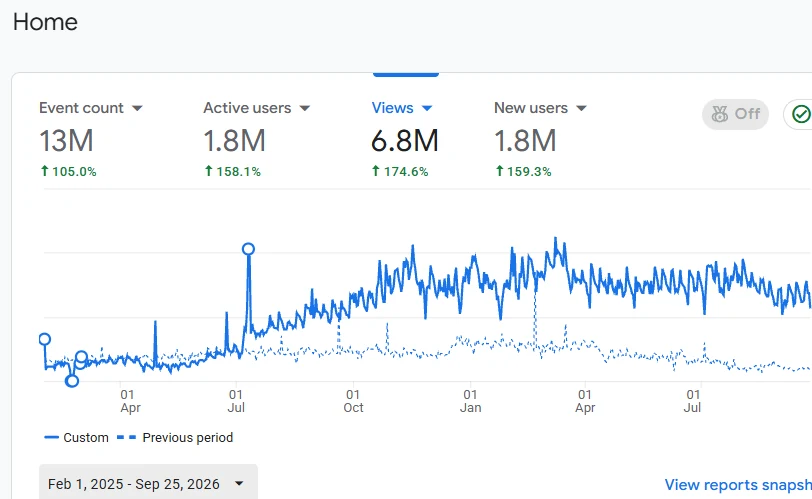
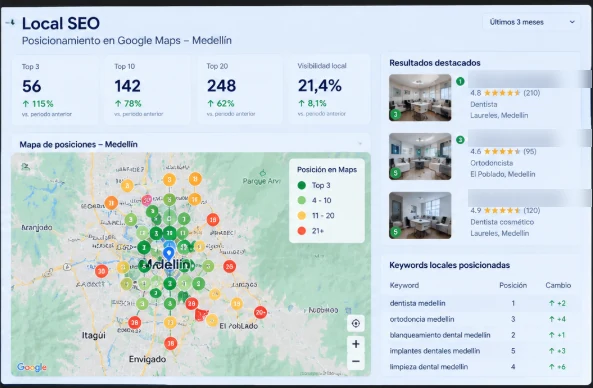
Screenshots from real client work, shared with permission. Names and domains are hidden.
Tools I use
Frequently asked questions
What is AI shopping?
AI shopping is when a person asks an AI assistant, such as ChatGPT, Google AI Mode, Gemini or Perplexity, to help them choose a product. The assistant compares options, prices and reviews and recommends a few products, often with links to the stores that sell them.
How does ChatGPT decide which products to recommend?
OpenAI says shopping research reads product pages on publicly available retail sites, gathers price, availability, reviews and specs, and cites its sources. Clear product data, crawlable pages and trusted reviews give your products a better chance.
How do I get my products into ChatGPT shopping?
Let OpenAI's search crawler read your store, keep product pages complete and consistent, and share a product feed through the Agentic Commerce Protocol when it is available to you. Shopify stores may already be connected through their platform.
Can I pay to appear in AI shopping results?
OpenAI describes ChatGPT's shopping research results as organic, and Perplexity says its product cards are not sponsored. You earn the place with product data and reputation, not with a bid.
Can customers buy without leaving ChatGPT?
Mostly not anymore. OpenAI scaled back Instant Checkout in March 2026, and purchases now finish on the store's own checkout. Google offers agentic checkout with Google Pay for eligible US merchants.
Does Reddit really affect AI recommendations?
Yes, it is one of the most cited sources. A Semrush study found Reddit among the top three cited domains in Perplexity, ChatGPT Search and Google AI Mode. Taking part honestly in relevant threads helps; fake posts do not.
Does AI shopping work for stores outside the US?
Many shopping features launched in the US first, such as Google's agentic checkout. ChatGPT's shopping research rolled out to logged-in users on all plans. In the audit I check what is available in your market and language.
Practical guides
Related services
Sources and further reading: OpenAI: shopping research in ChatGPT; OpenAI: product feed spec; Google: shopping in AI Mode; Google: Universal Commerce Protocol; Perplexity: shopping and Merchant Program; Semrush: Reddit in AI search; Forrester on agentic commerce.