
What keyword research gives your business
Keyword research is the process of finding the exact searches your potential customers make, measuring their demand and intent, and deciding which page on your site should rank for each one. It is the foundation of every SEO decision: what to write, what to fix and what to ignore.
Volume alone is misleading. A search with 50 monthly visits from people ready to buy can be worth more than one with 5,000 visits from people just curious. I sort keywords by intent and business value, check who ranks today, and flag the opportunities your competitors are missing.
New to this? Start with the plain-language guide: What is keyword research, and why does it decide what you build?
What's included
Buyer-intent keywords
Searches that signal a purchase or a call, grouped by service, product or location.
Competitor gap analysis
Keywords your competitors rank for and you do not, with the pages that win them.
Content map
Every keyword cluster assigned to one page, so pages never compete with each other.
Questions and AI prompts
The questions people ask, useful for FAQs and for AI answer visibility.
English and Spanish
Keyword research in both languages for bilingual markets in the US.
Clear deliverable
A spreadsheet with intent, volume, difficulty, current position and target page.
Who it is for
- Businesses starting SEO or launching a new website.
- Companies expanding to new services, products or cities.
- Sites with traffic that does not turn into leads.
- Businesses serving Spanish-speaking customers in the US.
How it works
- 01
Discovery
A call about your services, margins, best customers and the areas you serve.
- 02
Research
Keyword and question research in Semrush and Ahrefs, checked against the real results pages.
- 03
Competitor gaps
What your top competitors rank for and where the openings are.
- 04
Content map
Clusters assigned to existing pages or new pages, with priorities.
- 05
Handover
A walkthrough of the spreadsheet and the first pages to create or improve.
Typical turnaround: 5 business days for up to 150 keywords.
Pricing
A fixed-price project, or included in monthly plans.
Keyword research and content map
from $350Up to 150 keywords with intent, volume and target page.
Competitor gap analysis
from $250Keywords and pages your top three competitors win.
Content brief
$45A ready-to-write brief for one target keyword cluster.
Dedicated hours
$25 / hourFor ongoing research and reporting.
Keyword research is part of the first month of every monthly plan. See all plans and prices.
Not sure where to start?
Get a free SEO audit. In 30 minutes I show you what is holding your site back and the three changes I would make first.
Real experience behind this service
I have mapped keywords for very different businesses: inventory and service searches for more than 600 US car dealerships, category and product searches for stores with more than 3 million products, and programmatic patterns (service plus city or state) that grew a national directory to 1.13 million organic clicks in 16 months, according to Google Search Console (see the case study).
Proof from real client work
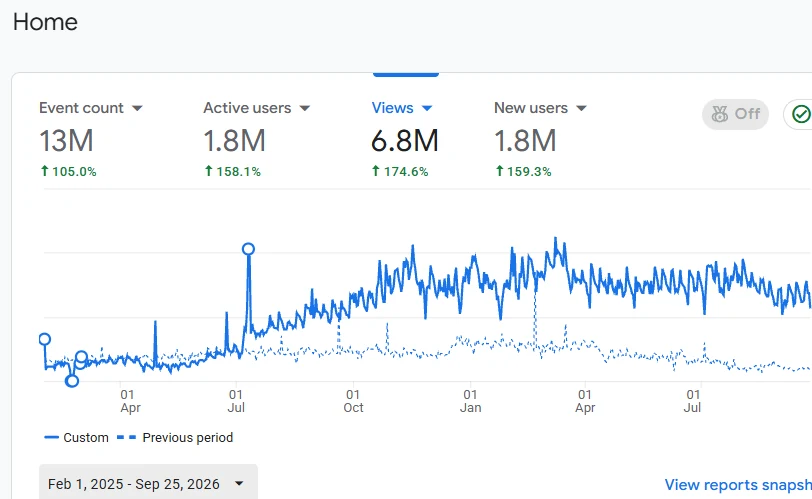
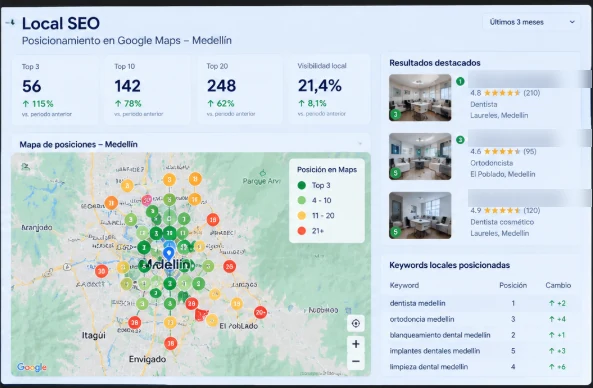
Screenshots from real client work, shared with permission. Names and domains are hidden.
Tools I use
Frequently asked questions
Is keyword research still relevant in 2026?
Yes, keyword research is still relevant in 2026, but the goal changed from repeating exact phrases to understanding what buyers want. It shows which searches and questions bring customers, which page should answer each one and which topics AI answers cover. My keyword research starts at $350 for up to 150 keywords.
What is keyword research?
Keyword research is finding the exact words your customers type into Google, how many people search them, how hard they are to rank for and what intent is behind them. Good research groups keywords into topics and maps each group to one page, so you build pages for searches that lead to sales.
How much does keyword research cost?
Keyword research with a content map starts at $350 with me and covers up to 150 keywords in about five business days. A competitor gap analysis starts at $250, a content brief costs $45, and extra hours cost $25 each. You keep the research even if you do the SEO yourself.
Can I do keyword research with free tools?
You can start, but free tools show limited volumes and rarely show difficulty, intent or what competitors rank for. Professional research combines paid databases like Semrush, your own Search Console data and a manual look at search results, which is where most good opportunities appear.
How many keywords do I need?
Most small and mid-sized businesses need 50 to 150 well-chosen keywords, grouped into clusters by service, product or location. More is not better: a list of 2,000 terms is hard to act on. The value is in the prioritization, so every cluster gets one target page and a clear order of work.
Can I use the research without hiring you for SEO?
Yes. The spreadsheet and the content map are yours to keep, and they are written so any writer, developer or in-house marketer can use them. Each keyword shows its intent, volume, difficulty and target page, and the handover call walks your team through the first pages to create or improve.
Do you research Spanish keywords for the US?
Yes. I research English and Spanish and check how Spanish-speaking customers in the US actually search, which is often different from Latin America: they mix languages, use local brand names and search with different words. Each Spanish keyword is checked against the real US results before it goes into the plan.
How is this different from a free keyword tool?
A free tool gives you numbers; keyword research gives you decisions. I add search intent, business value, who ranks today and why, and the gaps your competitors leave open. Then every cluster is assigned to one page, so your pages do not compete with each other and you know what to build first.
Practical guides
Related services
Sources and further reading: Google Search Central, SEO Starter Guide; Google Search Central, Creating helpful, reliable, people-first content.